ImagineSEO Made Simple: How to Get Your Website Found Online
Imagine spending hours creating a beautiful website, publishing helpful content, and offering great products or services—only to discover that hardly anyone is visiting it. This is where SEO (Search Engine Optimization) can make a difference.
SEO helps your website become more visible in search engine results, making it easier for people to discover your content, products, or services when they search online. But SEO is about much more than simply adding keywords to a webpage. It involves creating useful content, improving your website’s performance, understanding what people are searching for, and providing a better experience for visitors.
In this guide, we’ll explore how SEO works, why it matters, and practical ways you can improve your website’s visibility online.
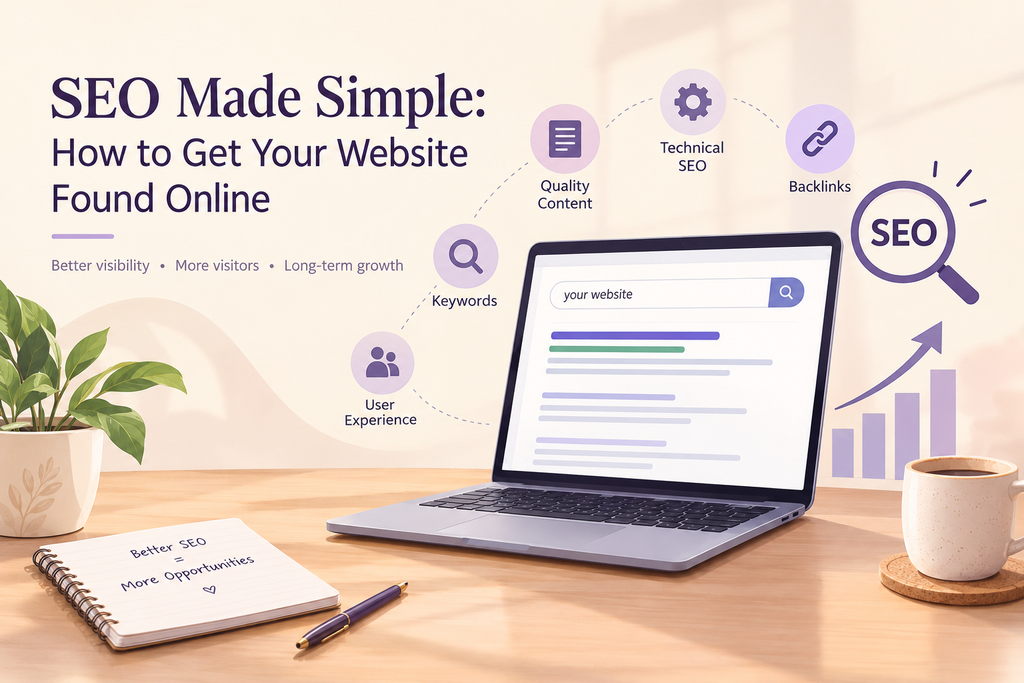
What Is SEO and How Does Search Engine Optimization Work?
SEO stands for Search Engine Optimization. In simple terms, SEO is the process of improving your website so that search engines can better understand your content and users can more easily find your webpages.
When someone searches for something online, search engines look through enormous amounts of information to find pages that may be relevant to the search.
A well-optimized website gives search engines clearer information about its pages while also helping visitors find what they need.
The goal isn’t simply to attract more visitors. The goal is to attract relevant visitors—people who are genuinely interested in the information, products, or services your website provides.
Why Is SEO Important for Your Website?
Having a website doesn’t automatically mean that people will find it.
Think about your own online habits. When you need an answer, want to compare products, or are looking for a particular service, you probably start by searching online.
This is why SEO can be an important part of building an online presence.
A good SEO strategy can help you:
- Increase organic website traffic
- Reach people who are actively searching for relevant information
- Improve online visibility
- Build brand awareness
- Establish credibility
- Generate enquiries and potential customers
- Create long-term opportunities for website growth
Unlike paid advertising, organic search traffic doesn’t require you to pay for every individual click. However, SEO requires patience, useful content, and ongoing improvement.
How Does SEO Help Search Engines Find Your Website?
Have you ever wondered how a webpage ends up appearing in Google Search?
Search engines generally work through three main stages: crawling, indexing, and serving search results.
What Is Crawling?
Crawling is the process through which search engines discover webpages.
Search engines use automated programs called crawlers to explore websites and follow links between pages. When a crawler discovers a new page, it can potentially add that page to the search engine’s list of known URLs.
What Is Search Engine Indexing?
After discovering a webpage, a search engine analyzes its content and other information.
The information that can be processed includes text, images, page titles, and other elements. If the page is eligible, information about it can be stored in the search engine’s index.
You can learn more about this process in Google’s official guide to How Google Search Works.
How Does Search Engine Ranking Work?
When someone enters a search query, the search engine searches its index for relevant pages.
Search engines use many different signals and systems to determine which results to display. Relevance, content, usability, and other factors can all play a role.
It’s important to remember that following SEO best practices doesn’t guarantee that a particular page will appear at the top of search results. Search engines continuously update their systems and evaluate webpages in different ways.
What Are the Main Types of SEO?
SEO is not one single activity. It includes several areas that work together to improve a website’s visibility and usability.
What Is On-Page SEO?
On-page SEO focuses on elements that you can control directly on your webpages.
This includes:
- Page titles
- Headings
- Written content
- Keywords
- Images and alt text
- Internal links
- URLs
- Meta descriptions
The purpose is to make your content clear, useful, and easy to understand for both visitors and search engines.
What Is Technical SEO?
Technical SEO focuses on the technical foundation of your website.
Important areas include:
- Website speed
- Mobile usability
- Website security
- Crawlability
- Website structure
- Broken links
- XML sitemaps
- Indexing
Even excellent content can struggle if a website has serious technical problems that prevent search engines from properly accessing or understanding its pages.
What Is Off-Page SEO?
Off-page SEO refers to activities and signals outside your own website.
One well-known example is backlinks. A backlink is a link from another website to your website.
Relevant links from trustworthy websites can help people discover your content and can provide useful context about your website.
However, SEO is not about collecting as many links as possible. Quality and relevance matter more than simply having a large number of backlinks.
Why Are Keywords Important for SEO?
Keywords are the words and phrases people use when searching online.
For example, someone looking for information about improving a website might search for phrases such as “how to improve website SEO” or “SEO tips for beginners.”
Keyword research helps website owners understand what their audience is searching for and what questions they may have.
However, keywords should be used naturally.
Trying to repeat the same phrase again and again can make an article uncomfortable to read and may reduce its usefulness.
The better approach is to understand the topic behind the search and create content that genuinely answers the reader’s question.
How to Use Keywords Naturally in Your Content
A keyword can naturally appear in important parts of a webpage, including:
- The main title
- Introduction
- Relevant headings
- Body content
- Image alt text where appropriate
- Internal link text
- Meta description
The key word here is naturally.
Don’t write for search engines alone. Write content that people actually want to read.
Why Is Content Important for SEO?
Content is one of the most important parts of a website’s online presence.
People search because they want something. They may want an answer, an explanation, instructions, advice, or a solution to a problem.
Your content should help them find it.
Useful blog posts, guides, tutorials, FAQs, and informative articles can help answer questions while demonstrating your knowledge and experience.
Good content should be:
- Helpful
- Original
- Accurate
- Easy to understand
- Well organized
- Relevant to your audience
Google’s guidance emphasizes creating helpful, reliable, people-first content rather than producing content primarily to manipulate search rankings.
How to Create SEO-Friendly Content
Before writing an article, think about the person who will read it.
Ask yourself:
What question are they trying to answer?
What problem are they trying to solve?
What information would actually help them?
Once you understand the reader’s goal, you can structure your article around that need.
Use clear headings, short paragraphs, relevant examples, and straightforward language.
This creates content that is useful to readers while also giving search engines a clearer understanding of the topic.
How Does User Experience Affect SEO?
SEO isn’t only about search engines. It is also about the people who visit your website.
Imagine clicking a search result and landing on a webpage that takes ten seconds to load, has tiny text, confusing navigation, and huge blocks of content.
Would you stay?
Probably not.
A good website should be easy to navigate, readable, mobile-friendly, and reasonably fast.
Your visitors should be able to find important information without having to work for it.
Why Website Speed Matters
People generally expect webpages to load quickly. A slow website can create a frustrating experience and may cause visitors to leave before they find what they need.
Improving images, reducing unnecessary elements, and maintaining good website performance can contribute to a better user experience.
Why Mobile-Friendly Websites Matter
A large number of people browse the internet using smartphones.
Your website should therefore work properly across different screen sizes. Text should be readable, buttons should be easy to use, and important information should remain accessible on smaller screens.
How Website Navigation Can Improve User Experience
Clear navigation helps visitors move from one page to another.
It can also help search engines discover additional pages on your website.
For example, you can link relevant blog posts to your About, Services, or Contact pages when those links are genuinely useful to the reader.
For more information about the website and the people behind it, you can also visit our About page.
What Are the Most Common SEO Mistakes to Avoid?
SEO can take time, which sometimes encourages website owners to look for shortcuts.
That can create more problems than it solves.
Here are some common mistakes to avoid:
Keyword Stuffing
Repeating keywords excessively can make your content sound unnatural.
Use relevant phrases where they make sense, but prioritize readability.
Duplicate or Low-Quality Content
Simply copying information from other websites doesn’t give your audience much additional value.
Try to provide original explanations, examples, experiences, or insights.
Poor-Quality Backlinks
Getting large numbers of irrelevant or questionable links isn’t a good SEO strategy.
Focus instead on creating useful content that people and relevant websites genuinely want to reference.
Ignoring Mobile Users
A website that works well only on a desktop can create a poor experience for smartphone visitors.
Always check how your pages look and function on smaller screens.
Neglecting Technical SEO
Broken links, indexing problems, slow loading times, and poor website structure can make it harder for both visitors and search engines to navigate your website.
How Long Does SEO Take to Show Results?
One of the most common questions people ask is:
“How quickly will SEO work?”
Unfortunately, there is no universal timeline.
The time required can depend on factors such as your website’s history, competition, content quality, technical condition, and the topics you are targeting.
Some changes may be reflected relatively quickly, while others can take considerably longer.
This is why SEO should be viewed as a long-term strategy, rather than an overnight solution.
Instead of expecting immediate results, focus on consistently improving your website and creating useful content.
How Do You Measure SEO Performance?
If you’re investing time in SEO, you need to know whether your efforts are producing useful results.
Some metrics worth monitoring include:
- Organic traffic
- Search impressions
- Search clicks
- Click-through rate
- Search queries
- Engagement
- Leads
- Conversions
Google Search Console can help website owners understand how their websites appear and perform in Google Search.
You can also explore Google’s official Search Console documentation for more information.
Remember that rankings aren’t the only measure of success. What matters is whether your website is attracting relevant visitors and helping them take useful actions.
How Can You Improve Your Website’s SEO?
Improving SEO doesn’t have to happen all at once.
Start with the basics.
Make sure your important pages are accessible, your website works well on mobile devices, your content is useful, and your navigation is clear.
Then look at your existing content.
Could an old article be updated? Could a page answer a question more clearly? Are there related pages that should be connected with internal links?
Small improvements made consistently can create a stronger website over time.
Google’s Search Essentials also recommends focusing on helpful content, using words that people search for in appropriate places, and making links crawlable so search engines can discover other pages on your site.
Final Thoughts: Why SEO Matters for Long-Term Online Growth
SEO may sound complicated, but its basic idea is simple:
Make it easier for people to find, understand, and use your website.
Create useful content. Understand what your audience is searching for. Keep your website technically healthy. Make it easy to navigate. Use relevant keywords naturally. And always prioritize the people who will actually read and use your content.
SEO isn’t about attracting thousands of random visitors.
It’s about connecting the right people with the right information at the right time.
When you approach SEO as a long-term process focused on usefulness and quality, you can build a stronger online presence and create more opportunities for your website to be discovered.